
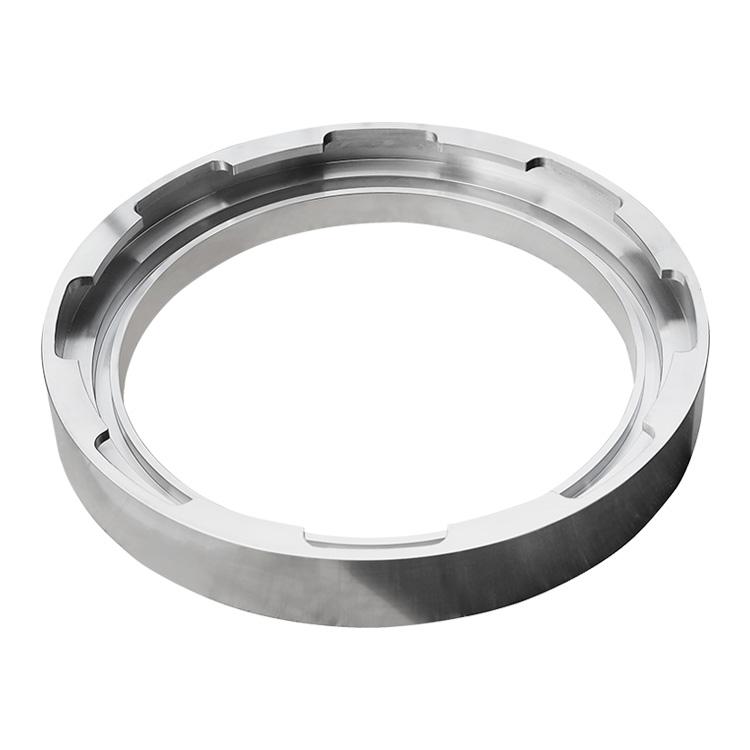
Stainless steel non-standard flanges for corrosion environments are specially engineered pipe connection components designed for
demanding industrial systems where standard flange dimensions, common pressure classes, or conventional face types may not fully match
the application requirements. These flanges are widely used in aggressive service conditions involving seawater, chemicals, acids,
alkalis, high humidity, salt spray, process fluids, and other corrosive media. Because corrosion resistance, sealing integrity, and
dimensional flexibility are critical, stainless steel non-standard flanges have become an essential solution for custom piping,
equipment connections, and retrofit projects across many industries.
This page provides a comprehensive, SEO-friendly overview of stainless steel non-standard flanges for corrosion environments, including
definitions, advantages, material options, common manufacturing standards, technical specifications, application areas, selection
considerations, and a detailed reference table. The content is written for industrial buyers, engineers, procurement teams, and
technical readers looking for clear, practical information about non-standard stainless steel flanges for corrosive service.
A stainless steel non-standard flange is a flange manufactured with dimensions, bolt patterns, face details, thicknesses, or pressure
ratings that do not fully match common standardized flange systems. While standard flanges follow fixed dimensions such as ASME
B16.5, ASME B16.47, EN 1092-1, JIS, or other regional standards, non-standard flanges are custom-made or semi-custom-made to suit
special process conditions or equipment interfaces.
In corrosion environments, non-standard stainless steel flanges are often required when the piping layout, vessel nozzle, pump connection,
or heat exchanger interface differs from standard norms. These flanges may include unusual outer diameters, custom bolt hole counts,
modified hub lengths, special sealing faces, enlarged bore sizes, or tailored thickness to accommodate pressure, temperature, vibration,
or corrosion allowance.
The main purpose of a non-standard flange is to provide a reliable sealed joint in systems where a standard flange cannot deliver the
exact fit or performance needed. In corrosive service, that fit is especially important because poor alignment, leakage, and crevice
formation can accelerate corrosion and reduce service life.
Stainless steel is one of the most widely used materials for flanges in corrosive environments because it combines mechanical strength,
durability, fabricability, and strong resistance to oxidation and many chemical attacks. The protective passive layer formed on stainless
steel surfaces helps reduce general corrosion and improve long-term reliability in wet, humid, or chemically aggressive conditions.
Different stainless steel grades offer different levels of resistance. Austenitic grades such as 304 and 316 are common for general
corrosion resistance, while molybdenum-bearing grades like 316L or duplex stainless steels are often selected for improved pitting and
crevice corrosion resistance. In highly aggressive environments, super duplex, 904L, or specialty alloys may be considered depending on
the process chemistry.
Stainless steel non-standard flanges are often selected because they can be custom-designed while still benefiting from the corrosion
resistance, cleanliness, and mechanical integrity of stainless steel. This makes them suitable for critical piping systems where both
custom geometry and corrosion performance are required.
| Advantage | Description | Benefit in Corrosion Service |
|---|---|---|
| Corrosion Resistance | Stainless steel resists oxidation, moisture damage, and many chemical attacks. | Extends flange service life in aggressive environments. |
| Custom Dimensions | Non-standard flanges can be manufactured to match special bolt circles, thicknesses, and faces. | Ensures proper fit on custom equipment and retrofit systems. |
| Improved Sealing | Accurate geometry supports better gasket compression and joint integrity. | Reduces leakage risk in corrosive media transfer lines. |
| Mechanical Strength | Stainless steel maintains structural stability under pressure and temperature variation. | Supports reliable operation in demanding industrial systems. |
| Low Maintenance | Long service life and reduced corrosion-related repairs lower maintenance needs. | Improves total cost of ownership. |
| Fabrication Flexibility | Custom machining, cutting, forging, drilling, and finishing are available. | Allows precise adaptation to project-specific requirements. |
| Hygienic Surface | Stainless steel can be finished for cleaner surfaces with reduced contamination risk. | Useful for sanitary or purity-sensitive corrosion applications. |
The choice of stainless steel grade depends on the chemical exposure, temperature, pressure, and corrosion mechanism. Below is a general
reference for commonly used grades in non-standard flange manufacturing.
| Grade | Typical Characteristics | Common Use Cases | Corrosion Resistance Notes |
|---|---|---|---|
| 304 / 304L | General-purpose austenitic stainless steel, good formability and weldability. | Water systems, mild chemical service, food processing, general industrial piping. | Good for moderate corrosion, but less resistant to chlorides than 316. |
| 316 / 316L | Contains molybdenum for improved resistance to pitting and crevice corrosion. | Marine environments, chemical plants, wastewater, acidic service. | One of the most popular choices for corrosion environments. |
| 321 | Titanium-stabilized stainless steel with better high-temperature stability. | High-temperature corrosive systems, exhaust and thermal process lines. | Useful where sensitization resistance is important. |
| 904L | High-alloy austenitic stainless steel with excellent resistance to many acids. | Severe chemical environments, sulfuric acid service, aggressive process media. | Higher corrosion resistance than standard 300-series grades. |
| Duplex 2205 | Balanced austenitic-ferritic structure with high strength and strong chloride resistance. | Offshore, desalination, chloride-rich systems, pressure piping. | Strong resistance to pitting and stress corrosion cracking. |
| Super Duplex | Very high strength and superior resistance to chloride corrosion. | Severe marine, offshore, and chemical service environments. | Used where extreme resistance is needed. |
Stainless steel non-standard flanges can take many forms depending on the piping configuration and sealing requirements. The following
types are commonly customized for corrosive service:
In corrosion environments, the flange type must be selected carefully to minimize crevice formation, reduce dead zones, and maintain
sealing integrity over time. For example, weld neck flanges are often favored in severe service because the tapered hub helps reduce
stress concentration and supports stronger welded connections.
Non-standard stainless steel flanges are defined by a combination of material, dimensions, pressure rating, face type, and finishing
requirements. While every project may differ, the following table summarizes common specification points used in industrial procurement
and engineering.
| Specification Item | Typical Options | Notes |
|---|---|---|
| Material Grade | 304, 304L, 316, 316L, 321, 904L, Duplex 2205, Super Duplex | Selected based on corrosion resistance and operating conditions. |
| Size Range | Custom small-bore to large-diameter configurations | Can be made to match special pipe or equipment interfaces. |
| Pressure Rating | Custom low, medium, or high-pressure designs | May be aligned with ASME classes or project-specific ratings. |
| Face Type | RF, FF, RTJ, raised custom face, special machined face | Chosen for gasket compatibility and sealing performance. |
| Bolt Hole Pattern | Custom bolt circle diameter, hole count, hole size | Important for non-standard equipment and retrofit applications. |
| Thickness | Standard, reinforced, corrosion allowance, custom heavy-duty | May be increased for pressure, corrosion, or structural support. |
| Surface Finish | Pickled, passivated, polished, machined, blasted | Surface quality can affect corrosion performance and sealing. |
| Manufacturing Method | Forged, machined from plate, cut ring, welded assembly | Method depends on size, strength, and budget requirements. |
| Standards Reference | ASME, ASTM, EN, JIS, DIN or customer drawing | Non-standard flanges often use standard material specs with custom geometry. |
| Inspection | Dimensional check, PMI, hydro test support, NDT, surface inspection | Critical for corrosive and high-integrity systems. |
Corrosion can damage a flange in several ways. General corrosion gradually removes material from the surface, reducing wall thickness and
mechanical strength. Pitting corrosion creates small but deep attack sites that can rapidly undermine sealing surfaces. Crevice
corrosion often develops in tight gaps such as gasket interfaces, bolt areas, and flange-to-pipe transitions. Stress corrosion cracking
may occur under tensile stress in combination with specific corrosive agents, especially chlorides.
In flange systems, corrosion is particularly dangerous because it can compromise both structural integrity and gasket sealing. A flange
that appears functional on the outside may already have significant damage around the sealing face, bolt holes, or internal bore. This
is why stainless steel non-standard flanges for corrosion environments often require precise geometry, high-quality surface finishing,
and appropriate material selection.
Using a custom flange can also help reduce corrosion risk by improving alignment, avoiding unnecessary reducers or adapters, and
eliminating stress points caused by poor fit. When the flange is designed to match the actual operating condition, the system is more
likely to perform reliably over time.
Stainless steel non-standard flanges are used in many industries where corrosive exposure is a daily challenge. Common applications
include:
In these environments, custom flange dimensions are often necessary because equipment comes from different sources, legacy systems
require replacement parts, or project engineers need a specific interface that is not covered by standard flange catalogs.
Stainless steel non-standard flanges offer several technical advantages when used in corrosive service. First, they support better
compatibility with custom gasket systems, which helps maintain sealing under thermal cycling and chemical exposure. Second, they enable
more efficient piping layout because the flange geometry can be adapted to existing equipment instead of forcing the design to follow a
standard dimension that may not fit.
Third, custom stainless steel flanges can reduce the number of joints, adapters, and transition pieces in a system. Every extra joint
is a potential leak path and corrosion point. By matching the real configuration, a non-standard flange can simplify the pipeline and
improve long-term reliability.
Fourth, the use of corrosion-resistant stainless steel helps preserve sealing surface integrity. In corrosive environments, the face of
a flange must remain smooth and stable so the gasket can maintain compression. Stainless steel offers a strong balance of surface
durability and machinability, which is especially important for precision sealing applications.
The flange sealing face plays a major role in preventing leaks. In corrosive service, the selected face type must match the gasket,
pressure rating, and process chemistry. Common face styles include raised face, flat face, ring type joint, and special machined faces.
For corrosive fluids, surface finish and face geometry should be carefully controlled to avoid leakage and crevice formation.
| Face Type | Typical Use | Corrosion-Related Advantage |
|---|---|---|
| Raised Face (RF) | General industrial piping and many standard gasketed joints. | Provides good gasket compression and sealing control. |
| Flat Face (FF) | Common in certain low-pressure or cast iron mating systems. | Reduces stress concentration on softer mating components. |
| Ring Type Joint (RTJ) | High-pressure or critical leak-tight applications. | Excellent sealing performance in severe service when properly machined. |
| Special Machined Face | Custom equipment, non-standard gaskets, and retrofit joints. | Allows optimized sealing for unique corrosion and pressure conditions. |
Stainless steel non-standard flanges can be manufactured using several methods depending on size, performance requirements, and cost
targets. Forging is often preferred for high-integrity applications because it produces a dense, strong grain structure. Machining
from plate or bar stock may be used for simpler designs, large custom rings, or lower-volume production. Welded assemblies may be used
when the design is too large or too specialized for a single forged blank.
The manufacturing method also affects corrosion performance. Forged and properly heat-treated stainless steel flanges typically offer
better reliability in severe service. After machining, surfaces may be pickled and passivated to remove contamination and improve the
protective oxide layer. In some environments, polished or electropolished surfaces can further reduce adherence of corrosive deposits or
contaminants.
Dimensional accuracy is especially important for non-standard flanges because custom bolt patterns and unusual interfaces must fit
precisely. Quality control should include verification of thickness, bore size, bolt circle diameter, face flatness, and surface finish.
Choosing the right stainless steel non-standard flange requires more than selecting a material grade. Engineers and buyers should
evaluate the full service environment before specifying the flange. Key selection factors include:
For example, a seawater system may require duplex stainless steel for improved chloride resistance, while a mild chemical line may
perform well with 316L. A high-pressure process connection may need a forged weld neck flange with a ring-type joint face, while a
low-pressure service connection may use a custom slip-on or plate flange. Matching the flange to the application is essential for
safety and durability.
The following table provides a general reference for common design elements used in stainless steel non-standard flanges. Exact
dimensions must be defined by engineering drawings, project standards, or equipment interfaces.
| Design Element | Possible Customization | Importance |
|---|---|---|
| Outer Diameter | Can be increased or reduced based on space and load requirements. | Affects fit, bolt layout, and structural strength. |
| Inner Diameter / Bore | May be matched to pipe bore, liner, or flow requirement. | Important for flow performance and pressure drop. |
| Thickness | Can be standard, reinforced, or heavy-duty. | Influences pressure capacity and corrosion allowance. |
| Bolt Circle Diameter | Customized to equipment or legacy flange pattern. | Critical for installation compatibility. |
| Bolt Hole Count | Can be modified to match non-standard mating parts. | Impacts loading distribution and assembly. |
| Hole Size | Adjusted according to bolt specification and tolerance. | Ensures correct fastening and alignment. |
| Hub Length | Extended, shortened, or omitted depending on flange type. | Important for weld stress and connection geometry. |
| Face Finish | Can be machined to specific roughness requirements. | Directly affects sealing and leakage resistance. |
Surface treatment is an important part of flange performance in corrosive environments. Even stainless steel can suffer from surface
contamination, embedded iron particles, or poor passive layer formation if not treated correctly. Common treatments include pickling,
passivation, polishing, electropolishing, and controlled blasting.
Pickling removes heat tint and oxide scales created during welding or fabrication. Passivation enhances the natural protective layer on
stainless steel and helps improve corrosion resistance. Polishing creates a smoother surface that can reduce contamination retention.
Electropolishing offers an even higher level of smoothness and is often used in sanitary or purity-critical systems.
For non-standard flanges used in aggressive corrosion environments, these treatments can improve service life and reduce the risk of
localized attack, especially around machined faces and welded areas.
Quality control is vital for stainless steel non-standard flanges because the custom nature of the product means dimensional errors can
lead to costly installation problems or seal failure. Common inspection items include:
In corrosion environments, special attention should be paid to fabrication cleanliness, weld quality, and post-processing. Even small
surface defects can become corrosion initiation points under harsh service conditions.
For blog, category, and industrial landing page optimization, the following keyword themes are relevant to stainless steel
non-standard flanges for corrosion environments:
These terms naturally support search visibility when used in headings, product category text, technical explanations, and specification
tables. A well-structured page should include clear H1, H2, and H3 headings, concise paragraph blocks, internal linking opportunities, and
a strong specification section that helps search engines understand the page topic.
| Environment | Typical Corrosive Agents | Flange Material Consideration |
|---|---|---|
| Marine Exposure | Salt spray, chlorides, humidity | 316L, duplex, or super duplex often preferred |
| Chemical Processing | Acids, alkalis, solvents, process chemicals | Material must match fluid compatibility and temperature |
| Wastewater Service | Moisture, sulfides, chlorides, contaminants | 316L and duplex are common choices |
| Desalination | Seawater and high chloride content | High pitting resistance is essential |
| Food and Pharma Cleaning Systems | Chemical cleaners, sanitizers, moisture | Smooth, cleanable stainless steel surfaces are preferred |
| Acid Transfer Lines | Strong acids and corrosive vapors | May require high-alloy stainless or specialty grades |
Stainless steel non-standard flanges for corrosion environments provide an important solution for industrial systems that require both
custom dimensions and high corrosion resistance. They are used to connect pipes, vessels, pumps, valves, heat exchangers, and other
equipment where standard flange sizes or patterns cannot satisfy the design requirements.
By selecting the correct stainless steel grade, matching the proper flange type, and defining precise dimensional and surface finish
requirements, engineers can improve sealing reliability, reduce leakage risk, and extend service life in harsh environments. Whether
used in marine service, chemical processing, wastewater treatment, or other corrosive applications, a well-designed non-standard
stainless steel flange can deliver durable and dependable performance.
For industrial buyers and technical specifiers, the most important factors are material compatibility, corrosion resistance, dimensional
accuracy, and inspection quality. When these elements are properly addressed, stainless steel non-standard flanges become a long-term
asset in corrosion-prone systems and a practical choice for custom piping solutions.
```


Copyright © 2022 Zhejiang Songlin Flange Co., Ltd.
Mapa del sitioEste sitio web utiliza cookies para garantizar que obtenga la mejor experiencia en nuestro sitio web.

 English
 Pусский
 Français
 Deutsch
 日本語
日本語 한국어
한국어 العربية
 Italiano
 Nederlands



 Whatsapp
 Teléfono
Comentario
(0)