
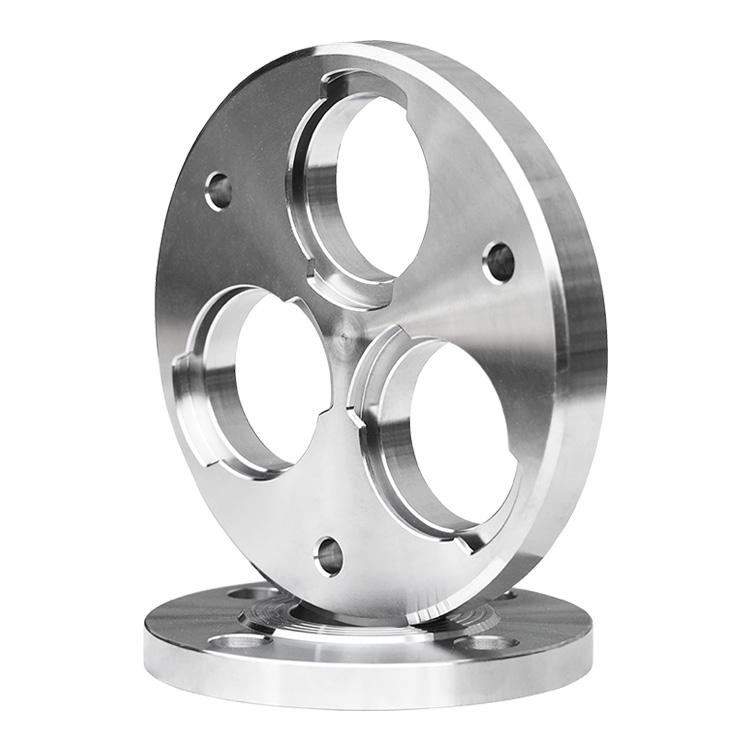
A precision welding neck flange for industrial applications is a high-performance pipe flange designed to provide exceptional strength, reliable sealing, and accurate alignment in demanding piping systems. Known for its long tapered hub and butt-weld connection, this flange type is widely used in industries where pressure integrity, temperature resistance, and long-term durability are critical. From oil and gas pipelines to chemical processing plants, power generation systems, shipbuilding, water treatment, and heavy manufacturing, the welding neck flange remains one of the most trusted flange solutions for critical service environments.
In industrial piping design, precision matters. A flange must not only connect pipes and equipment securely, but also maintain dimensional stability, resist vibration, and support consistent performance under pressure fluctuations. That is why the precision welding neck flange is often selected for applications that require high structural reliability and accurate fit-up. Its forged construction, tapered neck, and welded joint help reduce stress concentration and improve load transfer, making it especially suitable for high-pressure and high-temperature systems.
This guide provides a clear, SEO-friendly overview of precision welding neck flanges, including their definition, core advantages, typical specifications, material options, dimensional considerations, industrial uses, and selection factors. It is written for engineers, procurement teams, technical buyers, and industry readers who need practical, search-optimized information about precision welding neck flanges for industrial applications.
A welding neck flange is a type of pipe flange with a long tapered hub that is welded directly to a pipe or fitting. The bore of the flange matches the inside diameter of the pipe, allowing smooth flow and reduced turbulence. The term precision generally refers to tight dimensional control, accurate machining, and consistent manufacturing quality that improve installation accuracy and performance reliability.
Unlike slip-on flanges or socket weld flanges, a welding neck flange is designed to be butt-welded to the pipeline. This creates a strong, continuous connection that can better withstand thermal expansion, mechanical stress, and cyclic loading. For industrial applications, this makes the precision welding neck flange a preferred choice where failure is not acceptable and system uptime is essential.
Precision welding neck flanges are commonly manufactured to recognized international standards such as ASME, ANSI, DIN, EN, JIS, and other regional specifications. They are available in multiple pressure classes, sizes, materials, and face types to meet a wide range of industrial requirements.
Precision manufacturing directly affects flange performance. A high-accuracy welding neck flange ensures proper alignment between connected components, reduces installation errors, and improves sealing efficiency. In industrial systems, even small dimensional deviations can create leakage risks, uneven bolt loading, and premature gasket failure.
Precision also improves compatibility. When a flange is machined to exact tolerances, it fits more reliably with mating flanges, bolts, gaskets, and pipes. This is especially important in large piping networks where consistency across multiple flange connections is essential for safety and maintainability.
In addition, precision machining supports repeatable results. Whether used in a refinery, a power station, or a chemical process line, a precision welding neck flange helps reduce variation and provides a more dependable sealing surface.
Precision welding neck flanges offer several important benefits for industrial piping systems:
These advantages make the precision welding neck flange one of the most dependable flange types for critical applications where both safety and performance are priorities.
Precision welding neck flanges are used across a wide range of industries. Their combination of strength, sealing reliability, and dimensional accuracy makes them suitable for systems that operate under challenging conditions.
| Industry | Typical Use | Performance Requirement |
|---|---|---|
| Oil and Gas | Pipelines, refineries, offshore platforms, pressure vessels | High pressure, corrosion resistance, leak prevention |
| Chemical Processing | Reactors, transfer lines, process skids, storage systems | Chemical resistance, thermal stability, sealing reliability |
| Power Generation | Steam lines, boiler systems, turbine connections, cooling circuits | Heat resistance, fatigue resistance, structural integrity |
| Water Treatment | High-pressure water lines, filtration systems, pump stations | Durability, corrosion resistance, ease of maintenance |
| Shipbuilding | Marine piping, ballast systems, fuel lines, cooling systems | Vibration resistance, corrosion protection, compact design |
| Heavy Manufacturing | Compressed air, hydraulic systems, industrial utility lines | Load-bearing strength, long service life, accurate alignment |
| Petrochemical | Process piping, high-temperature transfer lines, reactor systems | Pressure integrity, chemical compatibility, flange precision |
Precision welding neck flanges are available in a broad range of sizes and ratings. The following table summarizes common specifications used in industrial applications. Exact dimensions vary according to the applicable standard, pressure class, and nominal pipe size.
| Specification | Common Options | Notes |
|---|---|---|
| Flange Type | Welding Neck, Raised Face, Flat Face, Ring Type Joint | Selected based on sealing and system design |
| Nominal Size | 1/2" to 48" and larger | Availability depends on standard and manufacturer capability |
| Pressure Rating | ASME Class 150, 300, 600, 900, 1500, 2500 | Higher classes support greater pressure and temperature service |
| Standards | ASME B16.5, ASME B16.47, DIN, EN 1092-1, JIS, custom drawings | Standard selection depends on region and system requirements |
| Material | Carbon steel, stainless steel, alloy steel, duplex steel, nickel alloy | Material choice depends on corrosion, temperature, and pressure |
| Face Type | RF, FF, RTJ | Face type affects gasket selection and sealing behavior |
| Manufacturing Method | Forged, machined, heat treated | Forging improves density and mechanical performance |
| Surface Finish | Stock finish, serrated finish, smooth machined finish | Finish should match gasket and sealing requirements |
| Connection Type | Butt-weld end | Provides a strong, permanent welded joint |
The material selected for a precision welding neck flange has a major impact on performance, cost, and lifespan. Industrial environments vary widely, so flange material must be matched to pressure, temperature, corrosion exposure, and regulatory requirements.
| Material Type | Key Properties | Typical Applications |
|---|---|---|
| Carbon Steel | Strong, economical, suitable for general service | Water systems, general industrial piping, oil and gas non-corrosive service |
| Stainless Steel | Corrosion resistant, clean, durable | Food processing, chemical service, marine systems, sanitary utilities |
| Alloy Steel | Improved high-temperature and high-pressure performance | Steam systems, power plants, thermal processing |
| Duplex Stainless Steel | High strength and strong corrosion resistance | Offshore, seawater, aggressive chemical environments |
| Nickel Alloy | Excellent corrosion and heat resistance | Severe chemical processing, high-temperature corrosive service |
Pressure class is one of the most important selection factors for a precision welding neck flange. Higher pressure ratings generally indicate thicker bodies, larger bolt circles, and greater load-bearing capacity. However, the correct class must always be selected based on system pressure, temperature, and applicable design codes.
| Pressure Class | General Performance | Typical Use |
|---|---|---|
| Class 150 | Low to moderate pressure service | Utility lines, low-pressure systems, water service |
| Class 300 | Moderate pressure and temperature service | Process piping, steam, industrial water systems |
| Class 600 | High pressure service | Refineries, chemical processing, pressurized systems |
| Class 900 | Very high pressure and critical service | Severe industrial environments, high-load piping |
| Class 1500 | Extreme pressure applications | Advanced process systems, specialized industrial pipelines |
| Class 2500 | Maximum pressure and demanding service | Critical high-pressure systems, specialized energy applications |
A precision welding neck flange may be supplied with different face configurations depending on the gasket type and sealing requirements. Choosing the correct face type is essential for leak-free operation and long-term reliability.
The selection of face type should always be coordinated with gasket material, bolt load, operating conditions, and flange standard requirements.
Industrial piping systems must remain reliable under real-world operating conditions such as vibration, thermal expansion, pressure surges, and corrosive media. A precision welding neck flange improves reliability by minimizing weak points in the connection.
The long tapered hub reduces stress concentration at the base of the flange. This is especially important in systems that experience repeated thermal cycles or mechanical movement. The butt-weld design creates a strong transition between pipe and flange, helping the joint behave more like a continuous component rather than two separate parts.
Additionally, precision machining helps ensure that the flange face is flat, the bore is properly aligned, and the bolt holes are accurately positioned. These details improve assembly efficiency and reduce the chance of installation-related defects.
When selecting a precision welding neck flange for industrial applications, several technical factors should be considered carefully:
For critical service, it is also important to evaluate pressure-temperature ratings, impact testing requirements, corrosion allowances, and any project-specific inspection standards.
Understanding how a welding neck flange compares with other flange types can help clarify why it is often chosen for industrial applications.
| Flange Type | Strength | Sealing Reliability | Typical Use |
|---|---|---|---|
| Welding Neck Flange | Very high | Excellent | High-pressure, high-temperature, critical service |
| Slip-On Flange | Moderate | Good | General-purpose piping, lower stress applications |
| Socket Weld Flange | Moderate to high | Good | Small bore, high-pressure systems |
| Blind Flange | High | Excellent for closure | Pipeline termination and pressure testing |
| Threaded Flange | Moderate | Moderate | Low welding preference or temporary systems |
Among these options, the precision welding neck flange stands out when reliability, stress resistance, and precision fit are top priorities.
Quality control plays a major role in the performance of precision welding neck flanges. Common inspection and testing practices include dimensional verification, surface examination, material testing, and pressure-related quality checks.
Precision manufacturing is not only about tight tolerances. It also involves repeatable process control, material traceability, and compliance with industrial standards.
The precision welding neck flange offers several installation benefits. Its alignment-friendly design supports accurate welding, and its bore match helps maintain smooth internal flow. Once welded, the connection becomes part of the piping system, reducing the chance of loosening under vibration.
For maintenance planning, the flange also offers practical advantages. Although it is a permanent welded connection, its bolted joint with a matching flange on the other side still allows disassembly when maintenance is required. This is especially useful in systems that need periodic inspection or component replacement.
Precision welding neck flanges are valued for their long service life, but regular maintenance is still important in industrial environments. Inspection should focus on signs of corrosion, gasket wear, bolt relaxation, face damage, and weld integrity.
Service life can be extended by selecting the correct material, ensuring proper installation, following torque guidelines, and protecting the flange from environmental exposure. In corrosive or high-temperature systems, periodic inspections help identify issues before they affect system performance.
The following keyword phrases are commonly associated with precision welding neck flange for industrial applications and can be naturally integrated into technical content, catalog pages, and industry articles:
A precision welding neck flange is manufactured with tight dimensional tolerances, accurate machining, and consistent quality control to ensure reliable fit, alignment, and sealing performance.
Its tapered hub and butt-weld connection distribute stress more effectively than simpler flange types, making it suitable for high-pressure and high-temperature service.
Common materials include carbon steel, stainless steel, alloy steel, duplex stainless steel, and nickel alloys, depending on the operating environment.
The most common face types are raised face, flat face, and ring type joint, each selected based on sealing requirements and system design.
They are widely used in oil and gas, chemical processing, power generation, marine systems, water treatment, and other industrial piping applications.
The precision welding neck flange for industrial applications remains a cornerstone component in modern piping systems. Its high mechanical strength, reliable sealing capability, precise dimensional control, and excellent performance under pressure make it a preferred solution for critical industrial service. Whether used in refineries, chemical plants, power stations, marine systems, or heavy manufacturing facilities, this flange type offers the durability and consistency required for demanding operations.
For engineers and buyers seeking a dependable industrial flange solution, the precision welding neck flange is a proven choice that combines strength, accuracy, and long-term reliability. By understanding its specifications, materials, face types, pressure classes, and application advantages, decision-makers can select the right flange for safe, efficient, and cost-effective system performance.
```


Copyright © 2022 Zhejiang Songlin Flange Co., Ltd.
Mapa del sitioEste sitio web utiliza cookies para garantizar que obtenga la mejor experiencia en nuestro sitio web.

 English
 Pусский
 Français
 Deutsch
 日本語
日本語 한국어
한국어 العربية
 Italiano
 Nederlands



 Whatsapp
 Teléfono
Comentario
(0)